
The Allahabad High Court has criticised Uttar Pradesh officials for restricting the number of people allowed to pray at a mosque in Sambhal, stating that officials should resign if they cannot enforce the rule of law.
The Act prohibits conversion of any place of worship and provides for the maintenance of the religious character of any place of worship as it existed on August 15, 1947.

The Allahabad high court on Friday stayed the arrest of Samajwadi Party MP Ziaur Rahman Barq in connection with violence in Uttar Pradesh's Sambhal district during a survey of a Mughal-era mosque.

Eid al-Fitr was celebrated across India with prayers for peace and brotherhood, alongside protests condemning US-Israel actions in West Asia.
The Uttar Pradesh government has informed the Supreme Court that the disputed "private well" near the Mughal-era Jama Masjid mosque in Sambhal was situated on public land. The state government said the petitioner failed to disclose there was a well within the boundary walls of the mosque known locally as "yagna koop". The committee, in a spot inspection, found that the well was situated outside the mosque boundary wall, the report said. The report said the state was committed to ensuring peace and harmony in the region and any restraint on the use of such public wells by the community at large may not help in achieving that goal.
Days after violence erupted over a survey of a Mughal-era mosque in Sambhal, an imam of another mosque was fined Rs 2 lakh for allegedly using a loudspeaker at high volume. The incident occurred in the Anar Wali Masjid, prompting authorities to take action. The imam, identified as Tahzeeb, was fined and granted bail, with orders to refrain from similar conduct for six months. The incident comes amid ongoing tensions in Sambhal following the November 24 violence during a court-ordered survey of the Shahi Jama Masjid, which resulted in four deaths and several injuries. The incident has become a major political controversy, with Congress leader Priyanka Gandhi Vadra raising the issue in Parliament.
A lawyer representing the Hindu side in the ongoing dispute over the Sambhal Jama Masjid has defended the second survey of the mosque, claiming it was conducted on the orders of the advocate commissioner. He also dismissed claims that the survey was conducted in haste or without court orders.
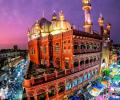
As the sun sets in a riot of colours during the days of Ramzan, the call to prayer is heard and Indian streets are transformed into places of both faith and feasting.
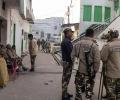
A four-member team from the Archaeological Survey of India (ASI) conducted a survey of the recently-discovered Shri Kartik Mahadev temple, five pilgrimage sites, and 19 wells in Sambhal, Uttar Pradesh, India. The survey followed the discovery of three damaged idols inside a well of the Bhasma Shankar temple, which was reopened after being shut for 46 years. The Shri Kartik Mahadev temple, also known as the Bhasma Shankar temple, was reopened on December 13 after authorities found the covered structure during an anti-encroachment drive. The temple houses an idol of Lord Hanuman and a Shivling and had remained locked since 1978. The district administration has requested carbon dating of the temple, including the well, from the ASI. Meanwhile, the Supreme Court has restrained courts across India from entertaining new lawsuits or passing any orders in pending ones seeking to reclaim religious places, especially mosques and dargahs, until further notice. This action halts proceedings in approximately 18 lawsuits filed by Hindu parties seeking surveys to determine the original religious character of 10 mosques, including the Gyanvapi at Varanasi, the Shahi Idgah Masjid at Mathura, and the Shahi Jama Masjid at Sambhal, where four individuals died in clashes. The Supreme Court will examine the legality, scope, and boundaries of the Places of Worship (Special Provisions) Act, 1991, which prohibits the conversion of places of worship and ensures the preservation of their religious character as it existed on August 15, 1947.
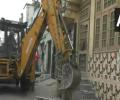
Weeks after violent clashes over a court-ordered survey of the Shahi Jama Masjid, the district administration in Sambhal, Uttar Pradesh, has launched a campaign against encroachments and illegal power theft in the area around the historic mosque. The administration began removing encroachments on Sunday morning, focusing on clearing drains outside houses and shops. The operation uncovered an illegal stockpile of domestic gas cylinders in a house, and the electricity department unearthed illegal connections in four mosques and a madrasa. The Bhasma Shankar temple, which was reopened by the district administration, has resumed regular worship.

Sambhal, Uttar Pradesh, remains on high alert following violence that erupted on November 24 over a court-ordered survey of the Shahi Jama Masjid. Police have deployed heavy security ahead of Friday prayers and a court hearing on the survey, which is expected to be tense. The violence, which left four people dead and several injured, stemmed from claims that a Harihar temple previously stood at the site of the mosque.
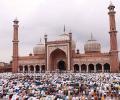
A space designated or reserved for communal Eid day prayers, year after year is called an Eidgah or an Idgah and many an Indian city has a landmark, historic Eidgah.

Three people were killed and scores of others, including around 20 security personnel and four personnel of the administration, were injured as protesters opposing a court-ordered survey of a Mughal-era mosque in Sambhal, Uttar Pradesh clashed with police on Sunday.
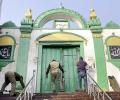
With the Uttar Pradesh Assembly polls scheduled for 2027, political experts are observing an increasing trend of temple-mosque disputes in the state, leading to heightened polarization. Recent bypolls saw the use of divisive slogans, and analysts believe this trend will intensify as the 2027 elections approach. The recent surge in claims about the existence of Hindu temples at the sites of mosques in various cities has fueled this polarization. The BJP-led government has been accused of promoting communal polarization, while opposition parties like the SP have criticized the ruling party's actions. The RSS chief has called for restraint in raising new temple-related disputes. Experts predict that communal polarization is likely to escalate in the coming days.

Seven men were arrested on Tuesday in connection with the November 24 Sambhal violence that left four people dead. The arrests bring the total number of people arrested in the case to 47. The violence erupted after a local mosque was surveyed following a court order on a petition claiming that there was a Harihar temple earlier.
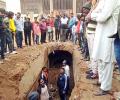
The Supreme Court of India has ordered a status quo on a private well located near the entrance of the Sambhal Jama Masjid, prohibiting any action regarding the well without its permission. The order came in response to a plea by the mosque's management committee, which challenged a lower court order that allowed a survey of the mosque, citing concerns over violence and loss of life during previous surveys. The court also instructed the authorities to file a status report within two weeks.
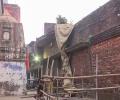
Devotees celebrated Holi at the Kartikeya Mahadev Temple in Khaggu Sarai, Sambhal, Uttar Pradesh for the first time in 46 years. The temple, which was reopened last December after being closed since 1978, saw enthusiastic participation from social and Hindu organisations. The event was held under tight security following communal violence in the area in 2024.
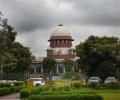
Commencing hearing on pleas challenging the constitutionality of the Places of Worship Act, 1991, the Supreme Court asked the Centre to reply to cross-pleas against or seeking implementation of statute.

The Centre and the Wakf Board on Thursday submitted before the Delhi High Court that the ceremony by Jama Masjid Shahi Imam anointing his son as his deputy and successor has no legal sanctity.

Besides, the team also found one empty cartridge which had 'made in USA' written on it, they said.

The Delhi High Court on Friday said the ceremony by Jama Masjid Shahi Imam Syed Ahmed Bukhari to annoint his son as his successor has no legal sanctity.

Owaisi criticized the court-ordered survey of a Mughal-era mosque in Sambhal, Uttar Pradesh, saying it weakens India and distracts from real issues like inflation and unemployment.

Two members of a three-member judicial commission formed by the Uttar Pradesh government to investigate the November 24 violence in Sambhal arrived in Moradabad on Saturday and are expected to visit the violence-hit town on Sunday. The commission, headed by retired Allahabad High Court judge Devendra Kumar Arora, has been tasked with determining if the clashes were spontaneous or a planned conspiracy and assessing the police and administration's response. The commission will also analyze the events leading to the violence and recommend measures to prevent similar incidents in the future.

'It was a disaster on his part to give an oral remark which allowed ascertainment of the religious character of places of worship.' 'This disrupted the social harmony of the country.'
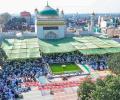
The law prohibits conversion of any place of worship and provides for the maintenance of the religious character of any place of worship as it existed on August 15, 1947.
The Mathura Shahi Masjid Eidgah Committee has approached the Supreme Court, requesting the court to prevent the central government from filing a response to a petition challenging the Places of Worship Act's constitutional validity. The committee accuses the BJP-led government of intentionally delaying its response. The court had previously issued a notice to the government in March 2021, but the government has yet to submit its reply despite numerous opportunities. The committee argues that the government's delay is intended to obstruct those opposing the challenge to the Places of Worship Act from filing their own responses. The petition also states that the pleas challenging the law's validity are scheduled for hearing on February 17, and closing the government's right to respond would serve justice. The Supreme Court previously issued a ruling in December 2022 that stopped courts from entertaining new lawsuits or issuing interim or final orders regarding the reclaiming of religious places, particularly mosques and dargahs. The ruling halted proceedings in 18 lawsuits filed by Hindu groups seeking surveys to confirm the original religious character of 10 mosques, including the Gyanvapi Masjid in Varanasi, the Shahi Idgah Masjid in Mathura, and the Shahi Jama Masjid in Sambhal. This decision was made in response to six petitions, including one filed by lawyer Ashwini Upadhyay, challenging various provisions of the Places of Worship Act. The 1991 law prohibits the conversion of places of worship and guarantees the preservation of their existing religious character as it stood on August 15, 1947. Notably, the dispute regarding the Ram Janmabhoomi-Babri Masjid in Ayodhya was excluded from this law. There are also several cross-petitions advocating for a strict enforcement of the 1991 law to uphold communal harmony and maintain the current status of mosques that Hindu groups seek to reclaim, claiming they were temples before being destroyed by invaders.

The Uttar Pradesh government will display posters of individuals accused of violence in Sambhal, seeking damages for public property destruction. This follows a violent clash during a mosque survey, leading to deaths and injuries.

The toll in the clashes between police and protesters opposing a court-ordered survey of a Mughal-era mosque in Sambhal, Uttar Pradesh, rose to four following the death of one more injured person, officials said on Monday.
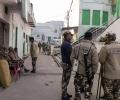
The Sambhal district administration has restored possession of land to three Hindu families who had fled the area during riots in the district in 1978, officials said.
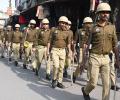
The Sambhal administration in Uttar Pradesh, India, has announced plans to put up posters of individuals involved in violence that occurred on November 24. Over 400 people have been identified and 32 arrested in connection with the violence, which stemmed from a local mosque survey. The administration is currently designing the posters and will finalize them today. Posters will be displayed after excluding those who have been arrested.
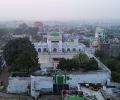
The communal violence in Sambhal that claimed four lives and left over 20 people injured has now sparked a debate over a purported rivalry between the Turk and Pathan communities, with political and administrative figures weighing in on the cause of the unrest.
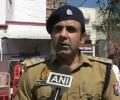
The Circle Officer (CO) of Sambhal, Anuj Chaudhary, has been cleared of any wrongdoing regarding his controversial remarks about Holi and Jumma (Friday) prayers. Chaudhary had previously stated that those uncomfortable with Holi celebrations should stay indoors, sparking criticism from some sections of the community. The police investigation was launched following a complaint by former IPS officer Amitabh Thakur.
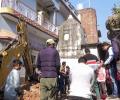
The Bhasma Shankar temple in Sambhal, Uttar Pradesh, has reopened after being locked for 45 years following communal riots. The district administration has requested the Archaeological Survey of India (ASI) to conduct carbon dating of the temple, including a well on the premises. The temple is being guarded round the clock and worshippers have started visiting. The reopening of the temple has been met with gratitude from local residents, who have expressed their desire to reconnect with their heritage.
Shahi Imam of Delhi's Jama Masjid Syed Ahmed Bukhari on Thursday triggered a controversy by inviting Pakistan Prime Minister Nawaz Sharif among other political bigwigs but did not invite Prime Minister Narendra Modi for the anointment ceremony of his son on November 22.

On Friday, a four-member team of the ASI surveyed the recently-discovered Shri Kartik Mahadev temple, five pilgrimage sites and 19 'koops' (wells).
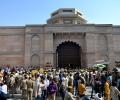
The Supreme Court of India is scheduled to hear a batch of petitions challenging the validity of certain provisions of the Places of Worship (Special Provisions) Act, 1991, which prohibits lawsuits to reclaim a place of worship or change its character from what prevailed on August 15, 1947. The pleas, including one filed by Ashwini Upadhyay, argue that these provisions violate the right to judicial remedy and create an arbitrary cut-off date. The matter will be heard in the backdrop of several ongoing cases related to places of worship, including the Gyanvapi Mosque in Varanasi and the Shahi Idgah Mosque in Mathura. The Muslim side has cited the 1991 law to argue that such suits are not maintainable. The Supreme Court had previously sought the Centre's response to Upadhyay's petition, which alleged that the law creates an "arbitrary and irrational retrospective cut-off date" for maintaining the character of places of worship.

'Do you see even a single woman offering Namaz?'

Can ordinary citizens counter this backward march? Can peace activists ensure that the two communities retain their bonds? Do they have a choice, asks Jyoti Punwani.
A potato with what is believed to be a divine image has appeared at the Tulsi Manas Temple in Sambhal, Uttar Pradesh, drawing devotees from near and far. The image is seen as a sign of the impending arrival of Lord Kalki, who is believed to be taking his incarnation in Sambhal. The appearance of the image has added to the celebrations of Holi, which falls on March 14th.
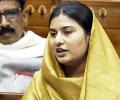
Samajwadi Party leader and Kairana MP Iqra Choudhary has moved the Supreme Court seeking effective implementation of the Places of Worship (Special Provisions) Act, 1991. This move comes amidst several petitions challenging the law's validity, including those filed by the Akhil Bhartiya Sant Samiti and lawyer Ashwini Upadhyay. The Supreme Court, in December 2022, had restrained all courts from examining fresh suits and passing interim orders in pending cases seeking to reclaim religious places. The Act aims to maintain the religious character of places of worship as they existed on August 15, 1947, but the dispute relating to Ram Janmabhoomi-Babri Masjid at Ayodhya was kept out of its purview. The court has listed Choudhary's plea with other pending pleas for February 17.
